|
Department
of
|
|
Home |
The Zang Research Group
|
||||||||
|
||||||||
Prof. Ling Zang Office: WEB 1666 Tel. 801-587-1551 Email: lzang@eng.utah.edu Mailing Address: 122 S. Central Campus Drive, #304, Salt Lake City, UT 84112-0056 Lab location: 5th floor SMBB 36 South Wasatch Dr., Salt Lake City, UT 84112 A review paper published in Chem. Rev. 2015 "Self-Assembly of Perylene Imide Molecules into 1D Nanostructures: Methods, Morphologies and Applications" 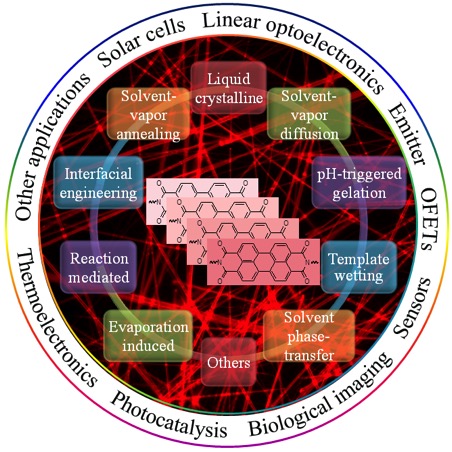 A review paper published in Acct. Chem. Res. 2015 "Interfacial Donor−Acceptor Engineering of Nanofiber Materials To Achieve Photoconductivity and Applications"  A book edited by Prof. Zang, "Energy Efficiency and Renewable Energy Through Nanotechnology" is now available at Amazon:  |
Welcome to the
Zang Research Group!
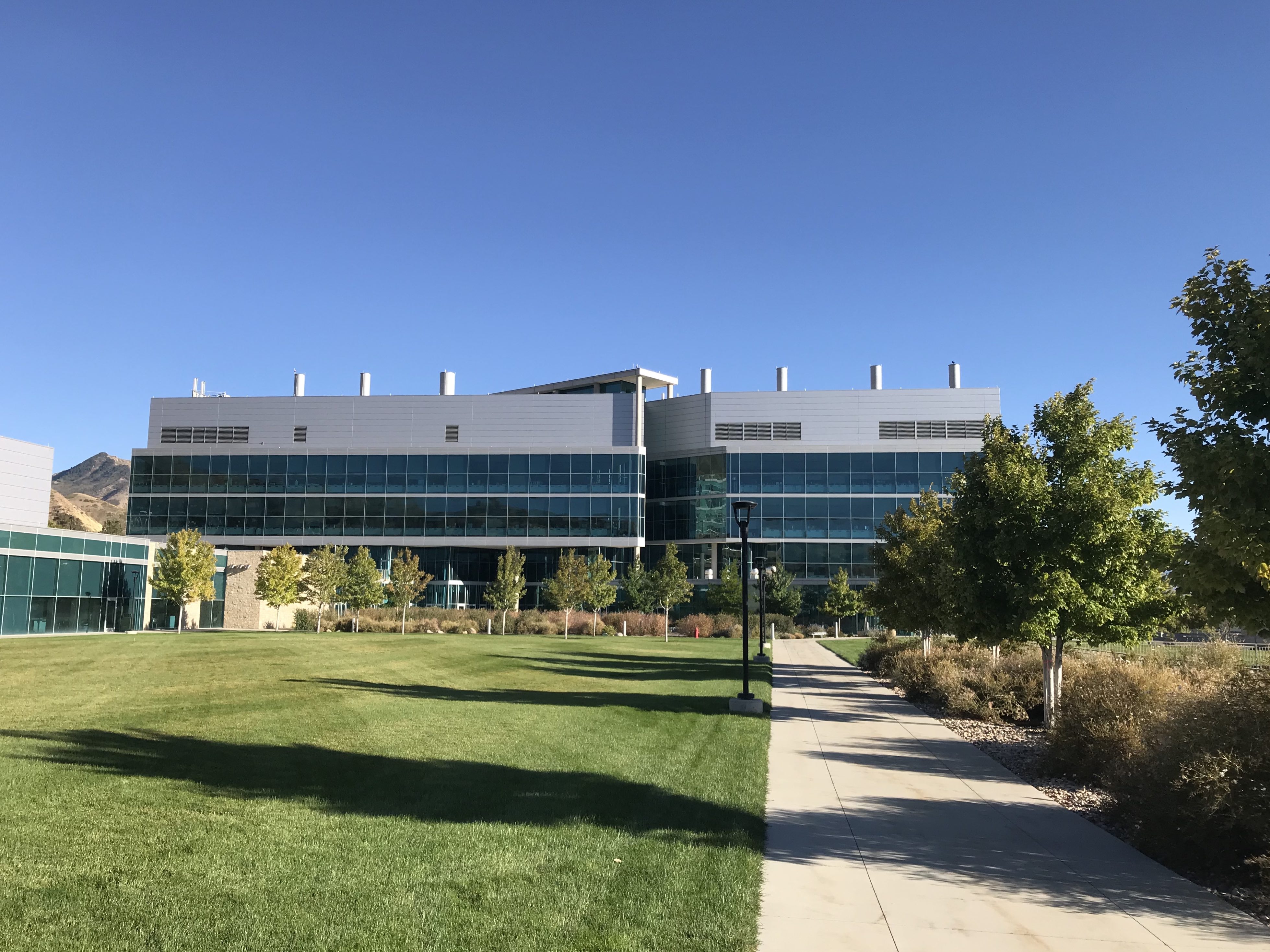
We are part of the Utah Science Technology and Research initiative (USTAR), a long-term, state-funded program to strengthen Utah's "knowledge economy." Our research covers broad range in nanoscale imaging, molecular probing, organic semiconductors and nanostructures, metal organic frameworks, porous graphitic carbons, chemosensors and devices, and the applications in chemical sensors and nanodevices. These research endeavors aim to address critical problems in the fields of public safety, health, renewable energy and environment. The implementation of this research embodies a synergy among 'making', 'measuring', and 'manipulating', aimed at breaking down conventional barriers between chemistry, physics, and engineering. Engaged students will receive training across diverse disciplines, including chemical synthesis, physical characterization, materials science, and nanoscale engineering and processing. Additionally, they will have the opportunity to collaborate within cohesive teams across various campuses, honing teamwork skills and gaining familiarity with the intellectual and scientific methods essential for solving complex scientific problems. Current Research Interests: Molecular self-assembly, nanostructure and nanomaterial, organic nanofibers and nanodevices, surface nanopatterning, nanoscale imaging, nanojunction charge transfer, fluorescence sensor, chemiresistive sensor, optoelectronic sensor, trace level detection of explosives, toxic chemicals and water pollutants, metal organic frameworks (MOF), porous graphitic carbons (PGC), removal and degradation of PFAS. Selected Review Articles: 1.
Ling Zang*, Yanke Che,
Jeffrey S. Moore*, One-Dimensional Self-Assembly
of Planar pi-Conjugated Molecules: Adaptable
Building-Blocks for Organic Nanodevices, Accounts
of Chemical Research, a special issue on
nanoscience, 41 (2008), 1596-1608. 2.
Ling Zang*, Interfacial
Donor−Acceptor Engineering of Nanofiber Materials
To Achieve Photoconductivity and Applications, Accounts
of Chemical Research, 48 (2015)
2705-2714. 3.
Shuai Chen, Paul Slattum,
Chuanyi Wang*, Ling Zang*, Self-Assembly of
Perylene Imide Molecules into 1D Nanostructures:
Methods, Morphologies and Applications, Chem.
Rev., 115 (2015) 11967-11998. 4.
Shuai Chen*, Lishan
Liang, Yuqian Zhang, Kaiwen Lin*, Mingna Yang,
Ling Zhu, Xiaomei Yang, Ling Zang*, Baoyang Lu*,
PEDOT:PSS-based Electronic Materials: Preparation,
Performance Tuning, Processing, Applications, and
Future Prospect (Invited Review), Progress in
Polymer Science, 166 (2025)
101900. 5.
Zengxing Zhang, Helin
Huang, Xiaomei Yang, Ling Zang*, Tailoring
Electronic Properties of Graphene by pi-pi
Stacking with Aromatic Molecules (Perspective),
J. Phys.
Chem. Lett., 2 (2011)
2897-2905. 6.
Jing Liu, Benjamin R.
Bunes, Ling Zang*, Chuanyi Wang*, Supported
single-atom catalysts: synthesis,
characterization, properties, and applications
(Review), Environmental
Chemistry Letters, 16
(2018) 477-505. 7.
Shuai Chen*, Nan Gao,
Benjamin R. Bunes, Ling Zang*, Tunable nanofibril
heterojunctions for controlling interfacial charge
transfer in chemiresistive gas sensors (invited
Review), J. Mater. Chem. C, 7
(2019) 13709-13735. 8.
Yu Xue, Shuai Chen*,
Jiarui Yu, Benjamin R. Bunes, Zexu Xue, Jingkun
Xu, Baoyang Lu*, and Ling Zang*, Nanostructured
Conducting Polymers and Their Composites:
Synthesis Methodologies, Morphologies and
Applications (Review), J. Mater. Chem. C,
8 (2020) 10136-10159. 9.
Nan Gao, Jiarui Yu, Shuai
Chen,* Xing Xin, Ling Zang*, Interfacial
polymerization for controllable fabrication of
nanostructured conducting polymers and their
composites (Review), Synthetic Metals, 273
(2021) 116693. 10.
Qingyun Tian, Shuai
Chen*, Jiarui Yu, Miao Zhang, Nan Gao, Xiaomei
Yang, Chuanyi Wang*, Xuemin Duan, Ling Zang*,
Tunable Construction of Electrochemical Sensors
for Chlorophenols Detection (Review). J.
Mater. Chem. C, 10 (2022)
10171-10195. 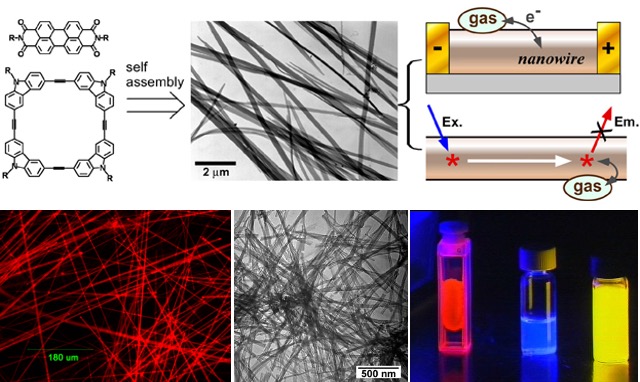 Research Example: Organic Nanofibers for Detecting Danger at Nanoscale: molecular design, self-assembly, 1D confinement and enhancement of optoelectronic properties, and application for optical/electrical sensing of explosives and other chemical threats. see Chem. Rev., 115 (2015) 11967-11998; Accounts of Chemical Research, 48 (2015) 2705-2714; Accounts of Chemical Research, 41 (2008) 1596-1608; J. Am. Chem. Soc. 132 (2010) 5743-5750; Nano Lett., 8 (2008) 2219-2223. 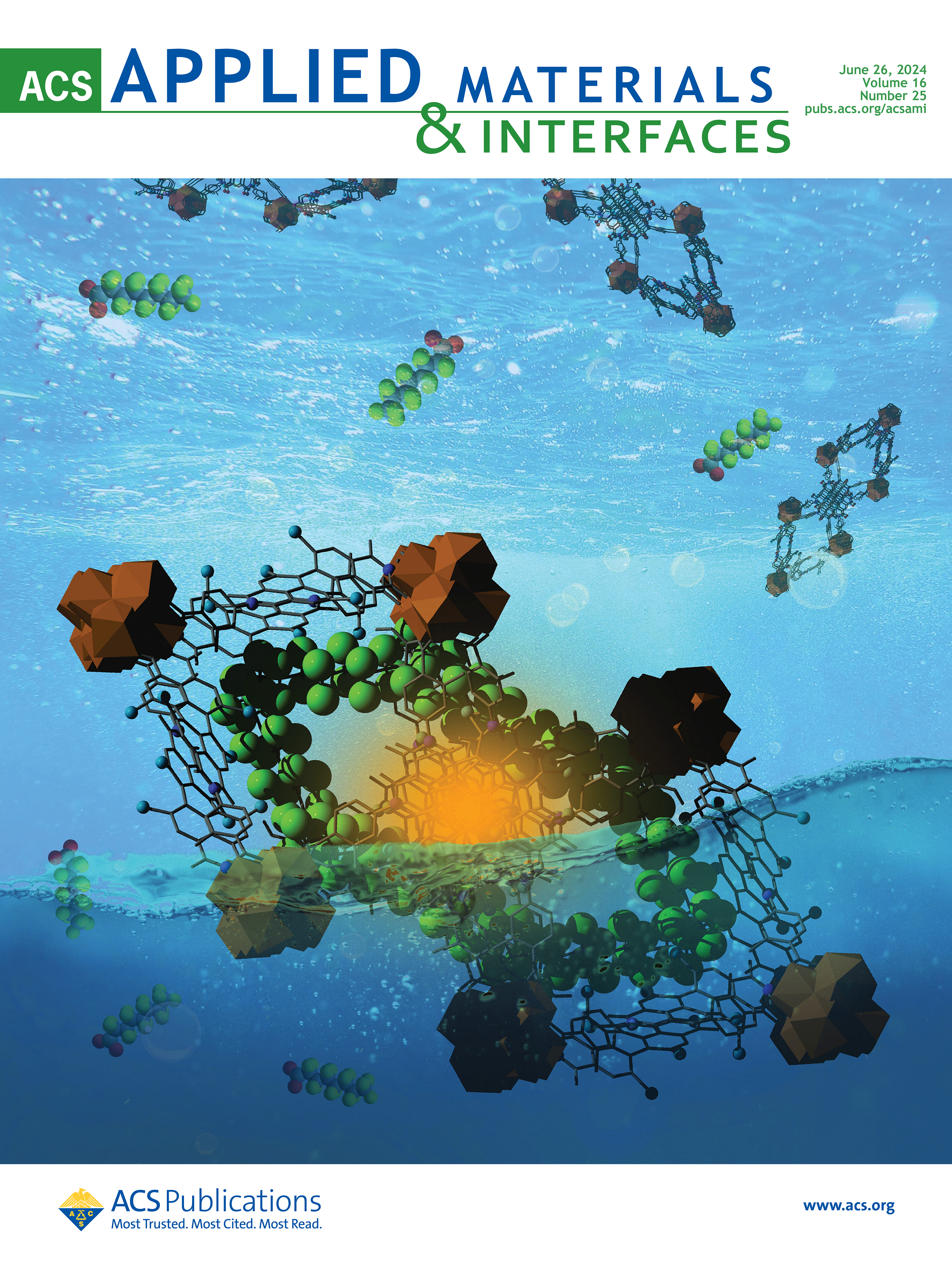 Research Example: MOF based dual functional material for removal of PFAS with real time monitoring, https://pubs.acs.org/doi/10.1021/acsami.4c03389 Tech transfer: In collaboration with Gentex, we strive to transfer the functional materials and sensor technologies into real products to serve the public. Our labs and offices are located in the USTAR building, James L. Sorenson Molecular Biotechnology Building, located on the main campus of University of Utah. |
|||||||
 |
||||||||
|
web design by Scitechland |